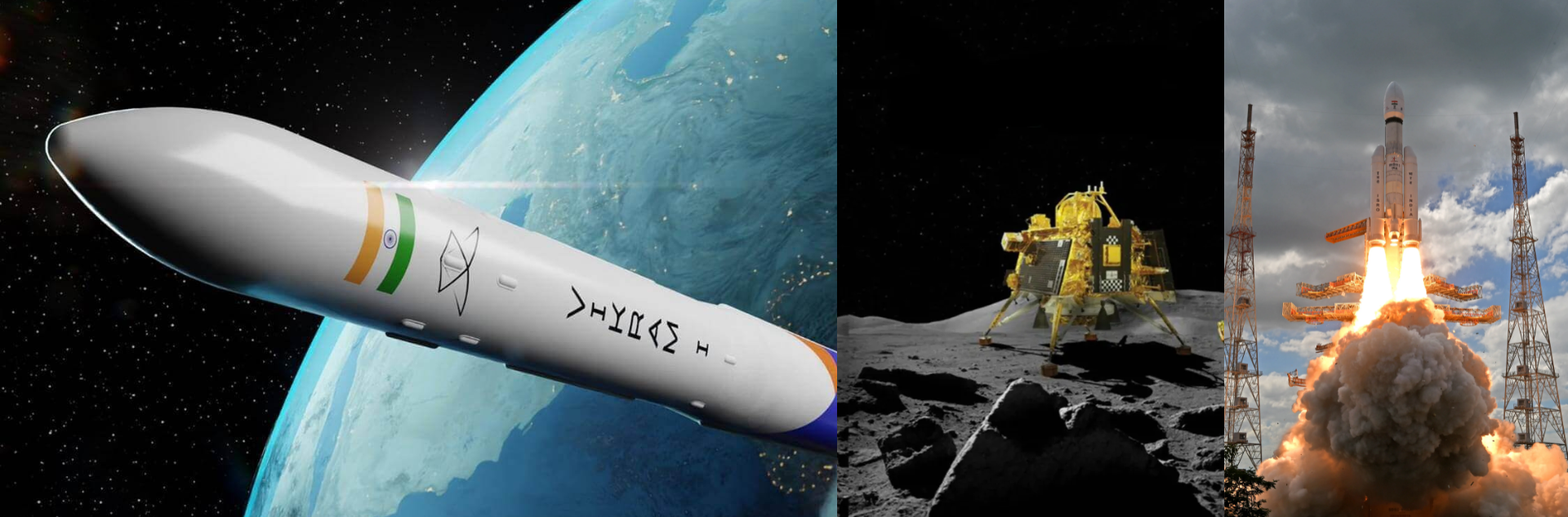
The Moon, being our nearest cosmic neighbor, has long been the launchpad for humanity’s greatest experiments in space exploration. From the United States’ iconic Apollo missions to the groundbreaking efforts of Russia and China, it has been the stage for global milestones. Yet, in recent years, the spotlight shifted dramatically when India’s ISRO’s Chandrayaan missions won the world’s applause.
India has achieved many firsts in South Asia: first to launch its own lunar probes, first to reach Mars orbit, etc. India is also the leading country in the region in terms of indigenous capacity: building its own rockets/launch vehicles, its own spacecraft, control centers, scientific payloads.
Today, the spotlight belongs to Chandrayaan. With this mission, India proved that South Asia, too, can make giant leaps in scientific discovery — no longer just the domain of the West
India’s lunar story began in 2008, when Chandrayaan-1 launched aboard a PSLV rocket and entered the Moon’s orbit. For a fraction of the cost of NASA missions, ISRO’s first lunar probe made history. And this was just the beginning for space missions for India – a decade later came Chandrayaan-2 (2019), a far more ambitious attempt.
This time India aimed not just to orbit, but to land on the Moon’s south pole, a region no country had ever attempted. The orbiter worked flawlessly, sending back stunning images and mapping the lunar terrain. The lander, named Vikram, after Vikram Sarabhai, the founder of India’s space program, however, lost communication just moments before touchdown. For many, that could have been the end of the story. But ISRO saw it differently: as a lesson, not a failure.
Then came the redemption arc. Chandrayaan-3 (2023). With steely determination, Indian scientists refined the design, re-engineered the lander, and launched again. On August 23, 2023, history was made: India became the first country to land near the lunar south pole, and only the fourth nation in the world to achieve a successful soft landing on the Moon.
What makes the Chandrayaan missions extraordinary is not just the science, but the spirit behind them. Each setback became fuel, each success built momentum. In true ISRO style, persistence really did pay off.
India’s space journey shows no signs of slowing down. After reaching the Moon, ISRO has turned its gaze towards the Sun and, soon, even human spaceflight.
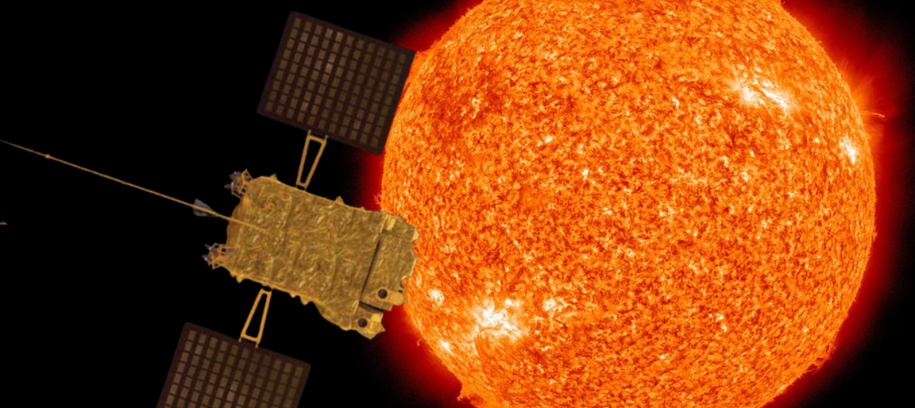
The Aditya-L1 mission, launched in September 2023, is India’s first mission dedicated to studying our nearest star. The spacecraft watches the Sun without interruption. Its instruments are already peeling back layers of mystery around solar flares, magnetic storms, and the corona, insights that will help us understand not just the Sun, but also how it shapes life and weather here on Earth.
Meanwhile, excitement is building for Gaganyaan, India’s bold leap into crewed spaceflight. If all goes to plan, the first uncrewed test flight will lift off in 2025, and a fully crewed mission is set to follow by 2027, marking the first time Indian astronauts will fly into orbit aboard an Indian-made spacecraft. From the fiery heart of the Sun to the dream of sending humans into space, ISRO is steadily carving its place among the world’s great spacefaring nations.
But Chandrayaan isn’t just about rockets or rovers, it’s about what they stand for. For India, it was a rare moment of unity and pride. For the Global South, proof that space is no longer reserved for billion-dollar superpowers. And for science, a reminder that progress is born of resilience, not just resources. Chandrayaan’s legacy is bigger than its data. It’s the story of a nation that stumbles, recalibrates, and rises — again and again.